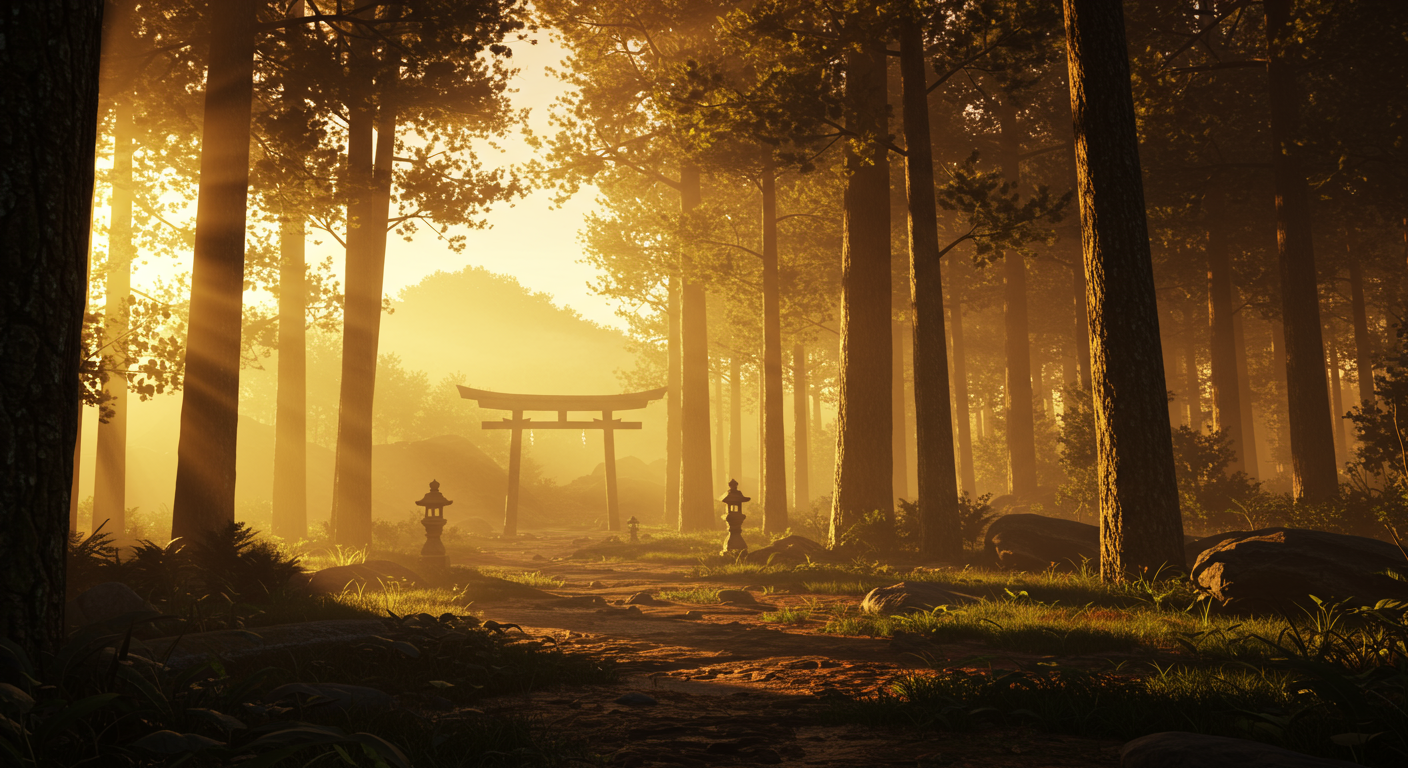
紀元前14,000年 - 紀元前300年 14,000 BCE – 300 BCE
縄文時代の世界 The World of Jomon
一万年続いた平和と、世界最古級の土器の文化。 A civilization of ten thousand years of peace, and the world's oldest pottery.

狩猟採集と
豊かな生活
Hunter-Gatherers &
Rich Lifeways
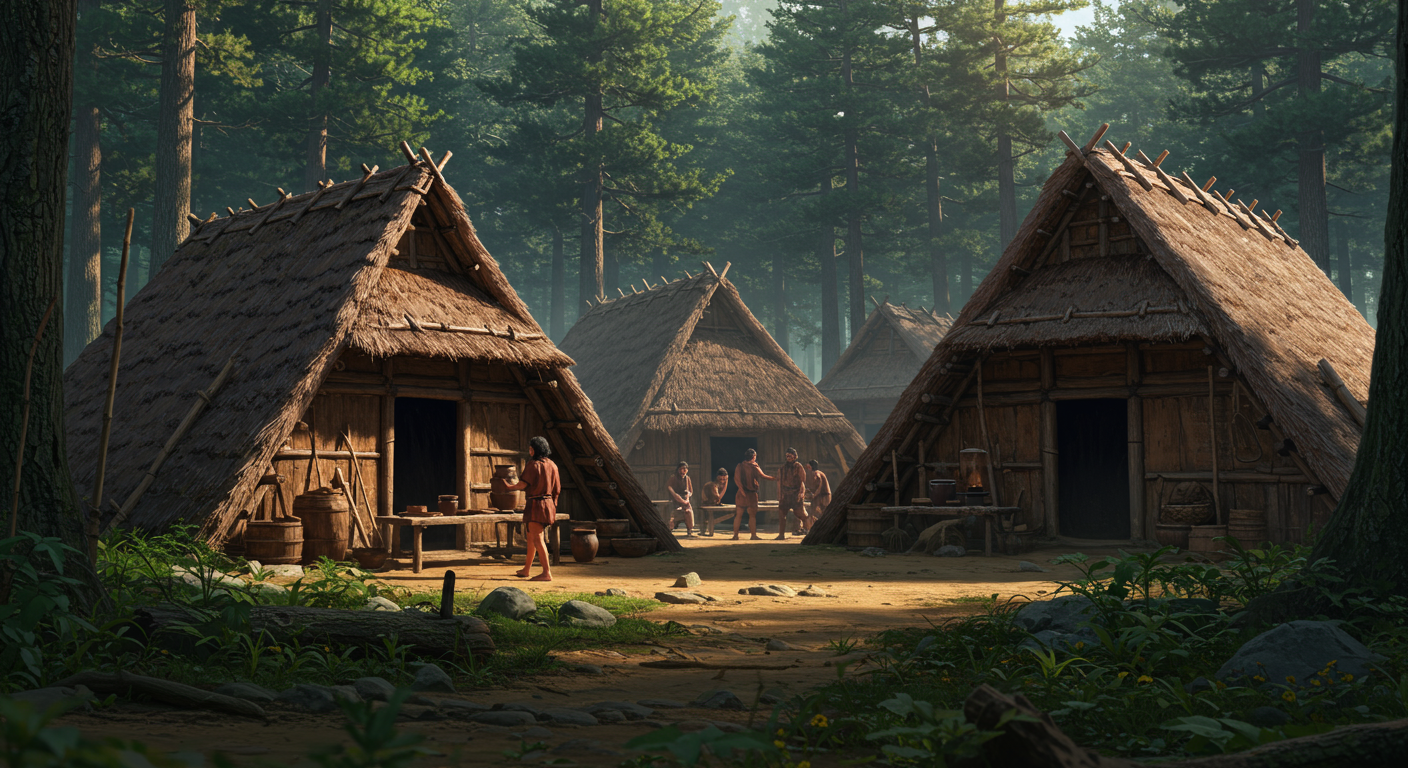
縄文時代(じょうもんじだい)は、世界史においてきわめて珍しい特徴を持ちます。それは、狩猟採集民でありながら定住生活を実現した社会の存在です。 The Jomon period is uniquely characterized by a highly unusual combination in world history: a hunter-gatherer society that achieved sedentary settlement.
絶えず移動するのではなく、竪穴式住居を建て、集落を形成しました。日本列島の豊かな自然環境——クリ・クルミ・ドングリ、野生動物、そして魚介類——のおかげで、本格的な農耕を行わないまま、一万年以上にわたって同じ場所で豊かに暮らすことができたのです。 Rather than wandering, they built pit dwellings and formed villages. The incredible abundance of the Japanese archipelago — nuts, game, and marine life — allowed them to thrive in one place for over 10,000 years without full-scale agriculture.
採集生活Foraging
クリ・クルミ・ドングリが主食の一つでした。Chestnuts, walnuts, and acorns were dietary staples.
定住集落Settlements
三内丸山遺跡のような大規模集落には数百人が暮らしていました。Large villages like Sannai-Maruyama housed hundreds of people.
世界最古級の土器 The World's Oldest Pottery
「縄文」という名称は、土器の表面に縄を押しあてて付けた文様に由来します。 縄文土器は約1万6000年前から作られた、世界最古級の土器です。 煮炊きに使われるなど、当時の暮らしを支えた大切な道具でした。 土器の魅力は、単なる道具ではなく、暮らしの知恵と美意識がひとつになっているところです。 さらに、力強い形や美しい装飾から、縄文人の豊かな感性もうかがえます。 The name "Jomon" comes from the cord-impressed patterns pressed onto the surface of the clay. Jomon pottery, dating back some 16,000 years, is among the oldest in the world. Used for cooking and daily life, these vessels were essential tools of their time — yet what makes them truly captivating is how practical function and artistic sensibility became one. Their bold forms and intricate decoration reveal the rich creative spirit of the Jomon people.
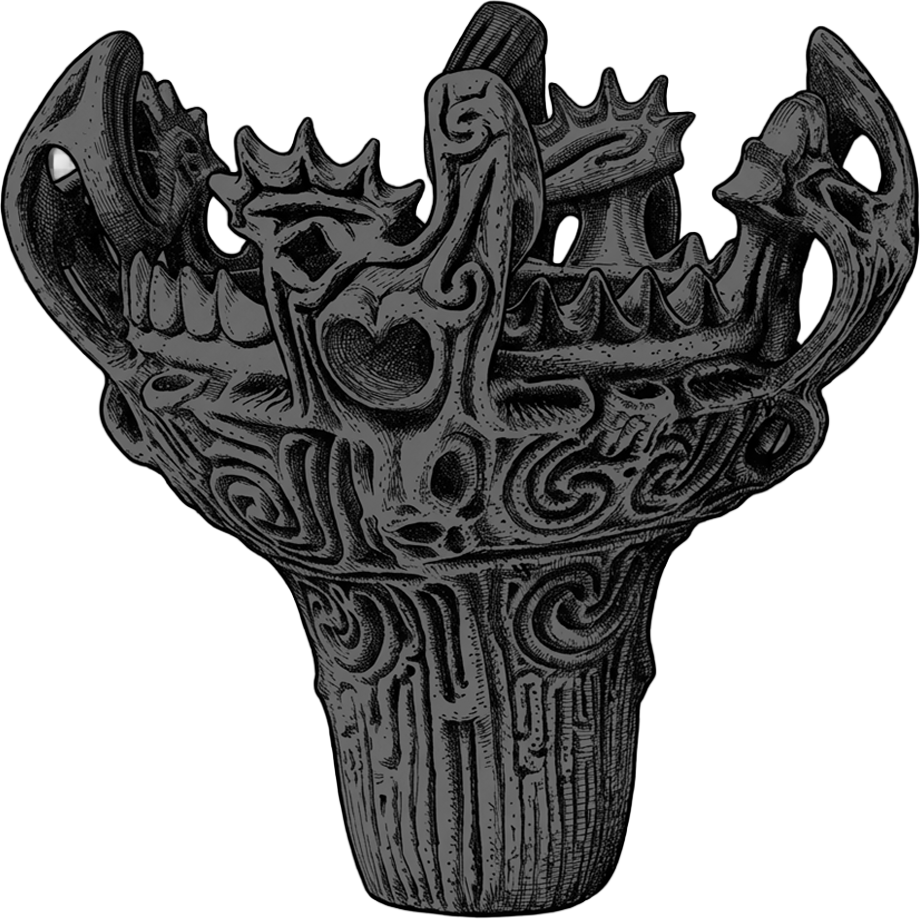
土器Pottery
約1万6000年前、縄文人が生み出した世界最古級の土器。煮炊きの実用品でありながら、火焔型土器のような圧倒的な造形美を持つ芸術品でもある——実用と美が分かちがたく結びついた、人類の創造力の結晶です。 Among the oldest pottery in the world, crafted by the Jomon people some 16,000 years ago. Practical vessels for daily cooking, yet also breathtaking works of art like the iconic flame pottery — proof that utility and beauty were never separate, but inseparable.
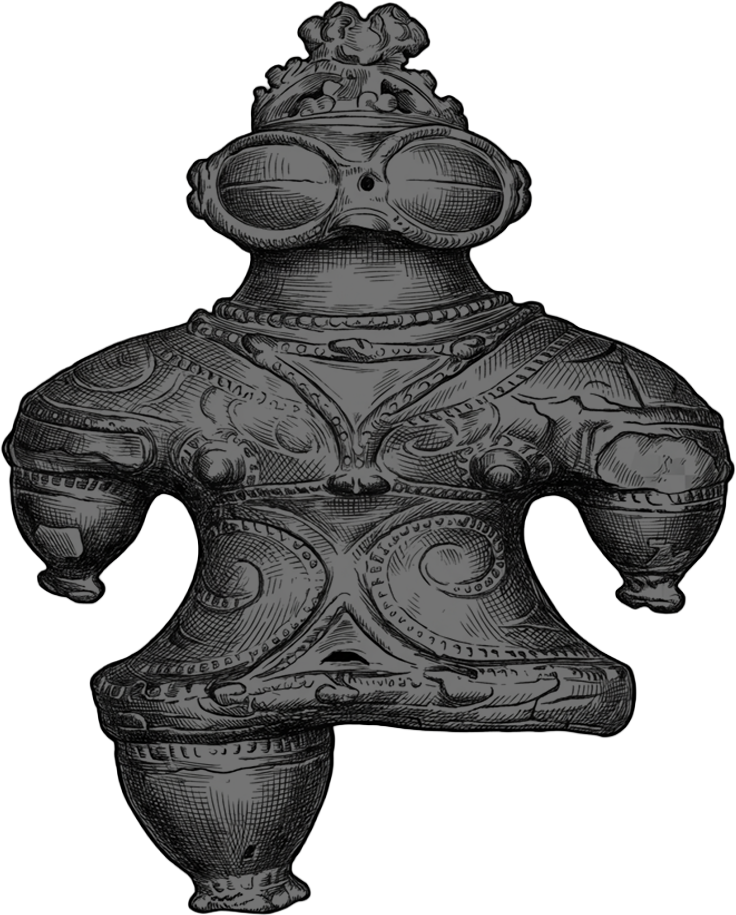
土偶Dogu
縄文中期の女性形の土製人形。地母神の象徴とも、苦しみを移して壊すことで厄を祓う呪具とも考えられており、壊されることではじめてその役目を果たしたのかもしれません。 A female clay figurine of the Middle Jomon period. Thought to represent an earth mother deity, or serve as a ritual vessel through which suffering was transferred and broken away — perhaps fulfilling its purpose only when shattered.
精神世界と
ストーンサークル
Spirituality &
Stone Circles
縄文人の世界観は深いアニミズムに根ざしており、山・川・樹木・動物すべてに精霊が宿ると信じていました。 The Jomon worldview was deeply animistic — they believed that spirits dwelled in mountains, rivers, trees, and animals.
縄文後期には、北日本を中心に巨大な環状列石(ストーンサークル)が築かれました。これらは共同の墓地であり、祭祀の場でもあり、夏至・冬至に合わせて配置されていることから、季節や時間への高度な理解があったことがわかります。 In the Late Jomon period, massive stone circles were constructed in northern Japan — communal cemeteries and ritual spaces aligned with the solstices, indicating a complex understanding of time.
-
✦
大湯環状列石Oyu Stone Circles
約4,000年前に築かれた巨大な日時計と集団墓地。A massive sundial and necropolis built 4,000 years ago.
-
✦
アニミズム信仰Animism
後に神道へと発展する、自然崇拝の精神的ルーツ。The spiritual roots that would later evolve into Shinto.
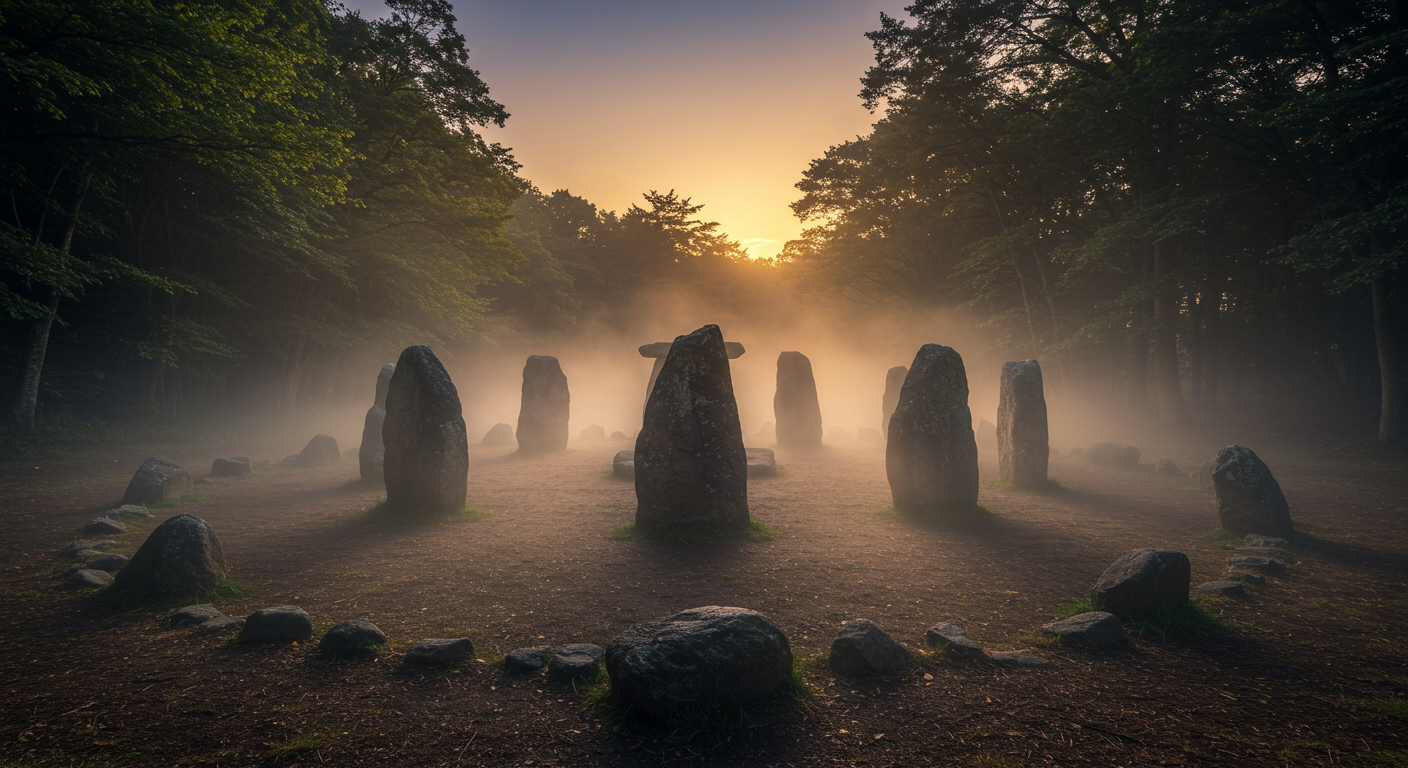
「彼らは自然を征服するためではなく、その循環と調和して生きるために、時の流れを刻んだ。」 "They marked the passage of time not to conquer nature, but to live in harmony with its cycles."
— 縄文の哲学— Jomon Philosophy